
FAQs: Pool Design and Installation
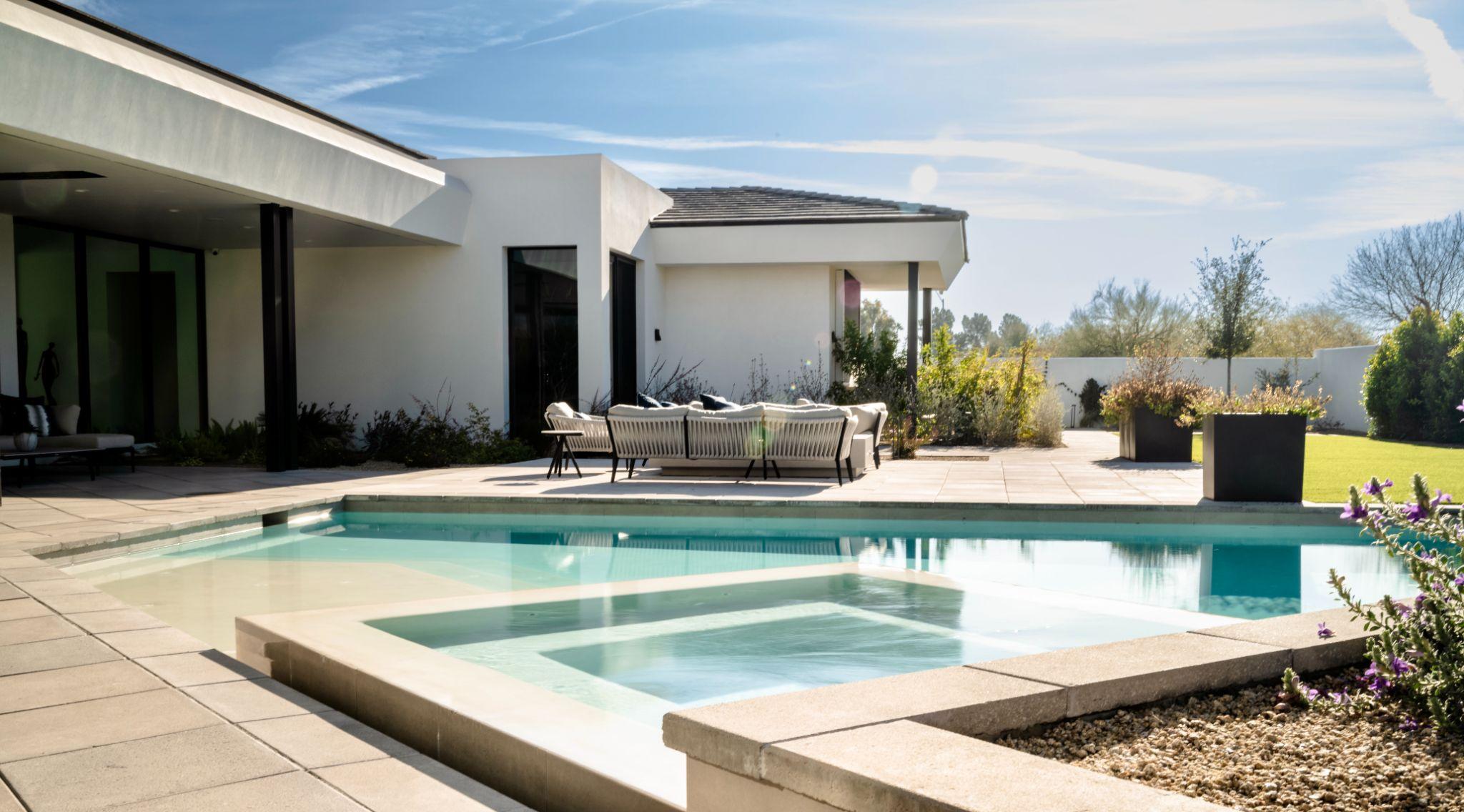
Investing in a swimming pool is one of the most significant upgrades you can make to your Arizona home. However, the path from an empty lot to a shimmering oasis involves complex engineering and aesthetic choices. To help you navigate your journey, we have compiled the most common questions regarding pool design and installation.
If you want to read more about landscape features for around your pool, check out our blog “A Homeowner’s Guide to Landscape Features for Entertaining”.
What Goes Into The Pool Design Process?

The pool design planning phase is where vision meets reality. It begins with a site analysis to check for utility lines, soil stability, and sun exposure. Designers then create a 3D conceptual plan that balances your aesthetic preferences with the functional constraints of your lot. This phase ensures that the pool feels like a natural extension of your home’s architecture.
How Do You Choose The Right Pool Layout For Your Backyard?
The right layout depends on your primary goal: are you hosting large parties, swimming laps, or creating a quiet retreat? Geometric layouts often complement modern architecture, while freeform “natural” shapes blend better with lush, desert-oasis landscaping. When designing pools, we look at the “flow” of the yard to ensure there is plenty of room for both the water and the dry-land activities around it.
What Types Of Pool Designs Work Best For Residential Properties?
Custom pool design offers endless variety, but most residential projects fall into three categories:
- Vanishing Edge (Infinity): Ideal for properties with significant elevation changes or views.
- Perimeter Overflow: Where water spills over all edges, creating a mirror-like surface.
- Classic Rectangular: Timeless, efficient for covers, and perfect for modern aesthetics.
How Long Does The Pool Installation Process Usually Take?
A standard residential pool installation typically takes between 8 to 12 weeks once permits are issued. However, custom features like complex rockwork, infinity edges, or integrated outdoor kitchens can extend this timeline.
What Happens During The Pool Construction Process?

The pool construction process follows a strict sequence:
- Layout and Excavation: Marking the shape and digging.
- Steel and Plumbing: Reinforcing the shell and installing the “veins” of the pool.
- Shotcrete/Gunite: Poured concrete to form the permanent shell.
- Tile and Coping: Adding the aesthetic borders.
- Plaster and Interior Finish: The final waterproofing layer before filling.
How Are Pool Plumbing And Electrical Systems Planned?
Pool plumbing and electrical systems are the “heart and lungs” of your pool. Planning involves calculating pump flow rates to ensure crystal-clear water and mapping high-voltage lines for heaters and low-voltage lines for LED lighting. Efficiency is key; we aim to minimize the distance between the equipment pad and the pool to reduce energy costs.
Can Pool Design Be Coordinated With Patios And Seating Areas?
Absolutely. In fact, it should be. The most successful pool design ideas treat the water and the surrounding patio as a single environment. By coordinating the pool’s elevation with seating areas, you can create “sunken” fire pits or swim-up bars that make the transition between water and land seamless.
What Materials Are Commonly Used In Modern Pool Construction?
Modern builds favor longevity and heat resistance. Common materials include:
- Interior: Pebble-tec or glass bead finishes (more durable than traditional plaster).
- Coping: Travertine, basalt, or limestone.
- Accents: Glass tile for a shimmering waterline.
How Do You Plan Pool Depth And Entry Points?

Depth is dictated by use. If you want a “play pool,” a 3-5-3 foot depth is standard. For diving, significant depth and clearance are required. Entry points—like “Baja shelves” (large shallow tanning ledges) or beach entries—have become more popular than traditional ladders, as they provide a place for children and pets to play safely.
What Safety Features Should Be Included In Pool Design?
Safety is non-negotiable. Essential features include:
- Fencing: High-quality wrought iron or glass barriers.
- Alarms: On doors leading to the pool and in the water itself.
- Non-slip surfaces: Selecting the right decking to prevent falls.
- Anti-entrapment covers: Standard in modern pool plumbing and electrical planning.
How Does Lighting Factor Into Pool Design And Installation?
Lighting transforms a pool from a daytime utility to an evening focal point. Automated LED lighting lets you change colors via your smartphone. We use “layered” lighting: internal pool lights for safety, accent lights for waterfalls, and soft perimeter lighting for the surrounding landscape.
What Approvals Are Typically Required Before Pool Installation Begins?
Before residential pool installation starts, you must obtain a municipal building permit and, in most cases, HOA approval. These entities check for “setback” requirements (how close you can build to your property line) and ensure the drainage plan won’t negatively impact your neighbors.
How Do You Plan For Long-Term Pool Use And Upkeep?

A “smart” pool is easy to maintain. Integrating automated salt-chlorination systems, in-floor cleaning heads, and variable-speed pumps during pool construction will save hundreds of hours in maintenance and thousands of dollars in energy costs over the life of the pool.
Why Does Having One Team Handle Pool Design And Installation Matter?
When the designers and the builders are the same team, nothing is “lost in translation.” It ensures that the artistic vision established during the pool design planning phase is technically feasible and executed with precision on-site. It also provides a single point of accountability for the homeowner.
How Early Should Pool Planning Start In A Backyard Renovation?
Ideally, pool planning should start 4–6 months before you want to swim. This allows ample time for custom design revisions, HOA approvals, and the permitting backlog, which can often take longer than the construction itself.
What’s The Best Pool Decking: Pavers Versus Tile?
- Pavers (Travertine/Concrete): Generally, the best choice for Arizona. They are thick, durable, and keep your feet cooler. Because they are sand-set, they can “flex” with the ground, preventing cracks.
- Tile: Stunning for aesthetics and waterlines, but can be slippery and prone to cracking if used over large deck areas due to ground shifting.
What’s The Safest Pool Decking Material?

Sand-set Tumbled Travertine is often considered the safest and most effective material for Arizona pools. Its natural porosity makes it slip-resistant even when wet, and its light-colored variants stay significantly cooler than concrete or dark stone in the 110°F summer sun.
What Is The Difference Between Spas, Spools, And Pools?
- Pool: A standard large body of water for swimming.
- Spa: A small, heated tub with high-pressure jets for therapy.
- Spool: A “Small Pool.” It’s larger than a spa but smaller than a traditional pool—perfect for compact yards where you want to cool off or soak, but don’t need to do laps.
Should I Add Heating To My Spa And Pool?
In Arizona, a spa heater is a must for year-round use. For the pool, a heater (or a heat pump) can extend your swimming season by 2–3 months in the spring and fall. Without a heater, the water is typically only comfortable from late May through September.
What Are The Benefits Of A Lap Pool?
Lap pools are narrow, long rectangular designs specifically for exercise. They are:
- Space-Efficient: Perfect for narrow side yards or smaller properties.
- Healthy Lifestyle: Promotes low-impact cardiovascular exercise.
- Low Maintenance: Smaller surface area means less debris and fewer chemicals.
- Aging-in-Place: An excellent option for older couples looking for a safe way to stay active.
Final Thoughts

A successful pool requires coordination, experience, and attention to detail. Desert Foothills Landscape brings full capabilities under one team, controlling timelines and maintaining high standards from design to pool maintenance. With award-winning design experience, long-standing expertise, and a detail-oriented culture, pool design and installation are handled with care, efficiency, and precision. When you are ready to move forward, you can book a consultation.
Landscaping can be more than window dressing; it can define your lifestyle.
Summary
This blog explains how thoughtful pool design and installation support clear planning, efficient execution, and long-term enjoyment for residential outdoor spaces.
Tags: