
Backyard Design FAQs: Planning, Layout, and Features
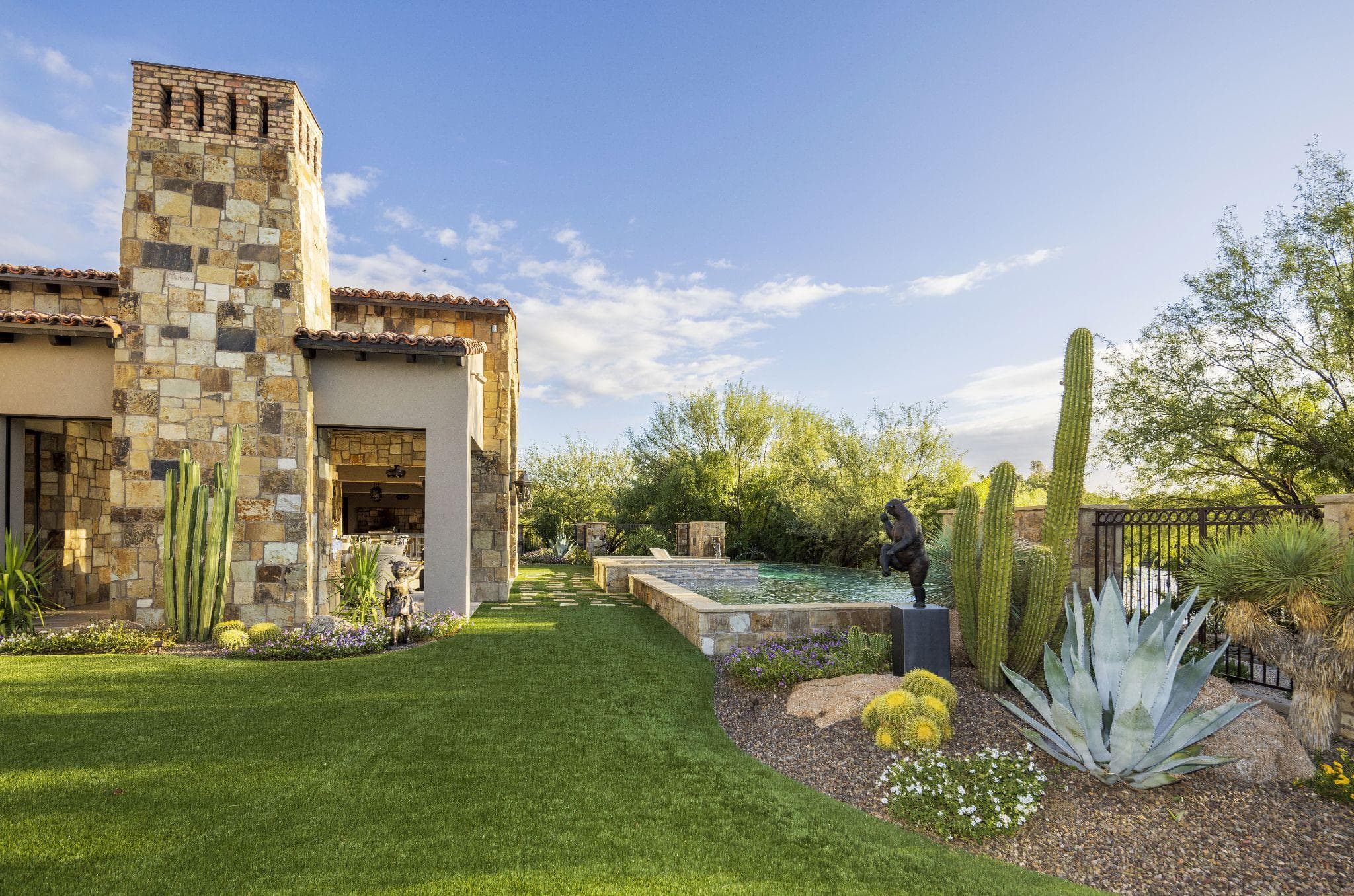
A well-planned outdoor space should feel easy to use, comfortable year-round, and suited to how you spend your time. Many homeowners relocating to Arizona want a space that supports entertaining, relaxation, and everyday living, yet feel unsure how all the pieces fit together. Without a clear plan, decisions around materials, layout, and features can feel disconnected. A thoughtful approach to backyard design helps bring clarity and structure to the process. This FAQ-style guide walks you through common questions so your backyard design choices feel informed, practical, and intentional.
If you’re looking for landscape inspiration, read our blog “A Homeowner’s Guide to Landscape Features for Entertaining”.
Is It Better To Use Pavers Or Concrete For A Patio?
When comparing pavers vs concrete patio options, pavers are almost always the superior choice for Arizona landscapes. Concrete slabs are prone to cracking due to extreme thermal expansion from desert heat and shifting soils. Pavers, however, are individual units that “flex” with the ground, making them more durable and easier to repair. Additionally, pavers offer a higher-end aesthetic and improved drainage.
In addition to traditional pavers, outdoor terrazzo tiles are a great option for Arizona homes. They provide a durable, slip-resistant surface that performs well in heat and are ideal for outdoor patios, pool decks, and entertaining areas. Travertine pavers are also a top recommendation, offering natural heat resistance and a wide variety of aesthetic choices. With multiple colors, textures, and patterns available, both materials allow you to create an outdoor space that is comfortable, visually appealing, and built to last in the desert climate.
Should I Choose A Fire Pit Or A Built-In Outdoor Fireplace?
The choice of a fire pit vs an outdoor fireplace depends on your social goals. A fire pit offers 360-degree seating, creating a campfire atmosphere perfect for large groups and casual conversation. An outdoor fireplace serves as a grand architectural focal point, providing a sense of privacy and wind protection while acting as a “living room” anchor.
What’s The Difference Between Saltwater And Chlorine Pools?
When weighing saltwater vs chlorine pool systems, it’s important to know that saltwater pools are chlorine pools; they simply use a salt-cell generator to produce chlorine on-site. Saltwater is generally gentler on the skin, eyes, and hair and requires less manual chemical handling. Traditional chlorine systems are often less expensive to install initially but require more frequent chemical balancing and maintenance.
Artificial Turf Vs. Real Grass – Which Is Right For My Yard?

The artificial grass vs real grass debate usually comes down to maintenance and water usage. Artificial turf provides a lush, green look 365 days a year with zero water or mowing required, making it ideal for pet runs and putting greens. Real grass can help cool the immediate environment, but in the desert, it requires significant water, fertilizer, and overseeding to remain viable.
How Can I Keep My Patio Cool During Extreme Heat?
If you are wondering how to cool patio areas effectively, a multi-layered approach is best. High-pressure misting systems are the gold standard, as they can drop the ambient temperature by up to 30 degrees through evaporative cooling. Pair these with permanent shade structures, such as solid-roof pavilions or pergolas, and outdoor-rated ceiling fans to keep the air moving.
Do Outdoor Kitchens Need A Sink Or Plumbing?
Outdoor kitchens add convenience and structure to backyard design. While a sink is not always required, an outdoor kitchen sink improves usability for food preparation and cleanup. Plumbing access should be considered early to avoid limitations later.
In backyard design, the kitchen layout should align with dining areas, shade, and lighting. A sink allows you to stay outdoors longer without returning inside. Planning plumbing early ensures the outdoor kitchen functions smoothly as part of the overall backyard design.
What Are The Best Materials For An Outdoor Kitchen Countertop?
Materials must be UV-resistant and heat-tolerant. Natural stone slabs like granite or quartzite are excellent because they won’t fade or warp in the sun. Poured concrete is popular for modern designs, but it must be sealed properly. Avoid quartz (which contains resins that can yellow in the sun) and dark-colored stones that can become hot enough to cause burns.
When Is A Retaining Wall Necessary In A Yard?

A retaining wall is necessary when there is a significant elevation change that could lead to soil erosion or drainage issues. Beyond their structural role, these walls are often used in backyard design to create level “terraces” for planting or to provide additional built-in seating around fire features.
How Can I Make My Landscaping More Pet-Friendly?
Pet-friendly design involves choosing non-toxic plants, providing shaded resting areas, and using materials that are paw-friendly. High-quality artificial turf is excellent for dogs, provided it includes an antimicrobial infill and a drainage layer. Avoid using small pebbles or sharp gravel in high-traffic pet zones.
Do I Need Landscape Lighting, And What Are The Options?
Lighting is essential for extending your yard’s usability after dark. Options include path lighting for safety, uplighting to highlight specimen trees (such as Saguaro or Mesquite), and “moonlighting” placed high in trees to cast a soft glow over the patio. Automated systems allow you to control zones via your smartphone.
How Do You Design A Landscape That Feels Cohesive From Start To Finish?
Cohesion is achieved by repeating materials, colors, and geometric shapes throughout the yard. For example, if your home has a modern aesthetic, your backyard design should feature clean lines and a restrained plant palette. Using the same stone for your pool coping, kitchen counters, and fireplace creates a unified “visual language.”
What Landscape Features Should Be Planned Together Instead Of Separately?

Pools and patios should always be planned together to ensure proper drainage and flow. Similarly, outdoor kitchens and shade structures must be designed in tandem so that the roof provides coverage exactly where the chef needs it, and gas/water lines can be integrated into the structure’s footings.
How Do You Design A Backyard That Feels Balanced, Not Crowded?
Balance is found in the relationship between “positive space” (features like kitchens and pools) and “negative space” (open turf or gravel areas). A common mistake is trying to fit too many features into a small area. We use the “rule of thirds” to ensure there is plenty of open room for movement between the major focal points.
What Landscape Design Choices Make A Backyard Easier To Use Every Day?
Ergonomics plays a huge role. This includes wide walkways (at least 4 feet wide), comfortable counter heights at the outdoor bar, and placing the most-used features (like the grill or spa) closest to the house. The less “friction” there is to use a space, the more often you will enjoy it.
How Does Professional Landscape Design Improve How A Space Functions?
Professional design accounts for the “invisible” elements: wind direction, sun angles, drainage, and sightlines for privacy. A pro can position a fireplace to block a neighbor’s second-story view or angle a patio to capture the best mountain views while shielding the seating area from the afternoon sun.
What Should Homeowners Know Before Starting A Landscape Design Project?

Know your budget, but more importantly, know your “why.” Are you building for your children, for large-scale entertaining, or for a personal retreat? Also, be aware of your HOA’s guidelines and the fact that high-quality backyard design and permitting can take several months before a single shovel hits the ground.
How Do Hardscape Features Influence Overall Landscape Design?
Hardscape is the “skeleton” of the yard. It dictates the movement and the permanent structure. Once the pavers, walls, and pools are set, they cannot be easily moved. Therefore, the hardscape must be perfect before the “softscape” (plants and trees) is ever considered.
What Role Does Lighting Play In Landscape Design Planning?
Lighting shouldn’t be an afterthought; it should be integrated into the layout. This includes running conduits under patios before they are poured. Good lighting highlights the “depth” of the yard, making a space feel larger and more secure at night.
How Do You Design A Landscape That Connects Indoor And Outdoor Spaces?
The goal is to blur the line between inside and out. This is often done by using “seamless flooring”—choosing an outdoor paver that closely matches the indoor tile—and using large sliding glass doors that open the living room directly onto the patio.
What Makes A Landscape Design Feel Intentional Rather Than Pieced Together?

Intentionality comes from a master plan. When a yard is “pieced together” over the years, it often has mismatched stones, conflicting plant styles, and awkward transitions. A master plan ensures that every feature added today is prepared for the features you might add five years from now.
Just as important as the plan itself is who is qualified to build it. Working with a certified, registered contractor who is affiliated with recognized industry associations ensures those designs are executed correctly, safely, and in compliance with local regulations. In Arizona, that also means incorporating Firewise protection from the start. A Firewise-certified contractor understands how to integrate defensible space, appropriate materials, and plant spacing into the master plan—protecting your home and community while preserving the long-term functionality and visual continuity of your landscape.
A well-executed outdoor space reflects thoughtful planning, skilled coordination, and attention to detail. Desert Foothills Landscape brings experience, capabilities, and long-standing expertise together under one team, allowing projects to move efficiently while maintaining high standards. Award-winning designs and a strong internal culture ensure backyard design decisions support both daily use and long-term enjoyment. When you are ready to move forward, you can book a consultation.
Landscaping can be more than window dressing, it can define your lifestyle.
Summary
A successful backyard design requires a strategic harmony between aesthetic vision and technical precision, ensuring that every material and feature serves a long-term functional purpose. By addressing foundational questions—such as choosing the durability of pavers over concrete or the year-round luxury of a saltwater pool—homeowners can avoid common pitfalls and create an environment tailored to the unique demands of the Arizona climate. From the cooling efficiency of high-pressure misting systems to the social connectivity of a well-placed outdoor kitchen sink, every choice should be part of a master-planned approach that prioritizes flow and cohesion. Ultimately, an intentional design ensures that hardscape, lighting, and specialty features work together to transform an open plot into a sophisticated, high-performing sanctuary.
Tags: